


The American healthcare system is broken. Everyone agrees on that — but not on how to fix it. For decades, the debate has been split between two extremes: government-run universal healthcare or continuing the current insurance-driven hybrid. But what if there’s a third option no one wants to talk about — forcing the medical industry to operate as a true free market?
At first glance, the idea sounds radical. How can an industry built on human suffering and crisis be left to market forces? Isn’t healthcare too important to trust to capitalism? These questions make for great political soundbites, but they miss a deeper truth: there are parts of the system where market dynamics already work — and work well.
Take elective procedures like LASIK, cosmetic surgery, or dental implants. These services are rarely covered by insurance, which means patients pay directly — and providers are forced to compete. Over time, this has led to stable or falling prices, higher quality, and better service. The reason is simple: competition works when people can shop, compare, and walk away.
The same is true for direct primary care (DPC), where patients pay a monthly subscription to their doctor and cut out insurance entirely. DPC doctors see fewer patients, spend more time with each one, and eliminate the 30–40% of overhead tied to insurance billing. Patients benefit from better access and simpler pricing. In this environment, doctors compete on service, not just survival.
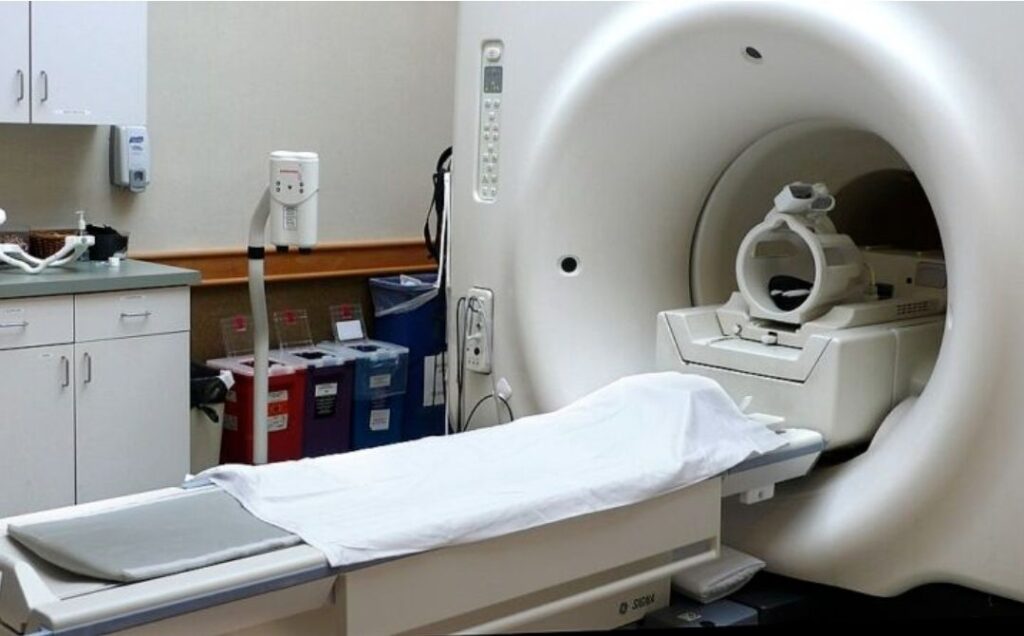
Independent urgent care clinics and imaging centers offer further proof. An MRI at a private facility might cost $300 cash, while the same scan at a hospital billed through insurance could run $3,000 or more. Why? Because in cash markets, pricing is visible and competitive — and in the insurance world, it’s inflated by bureaucracy, billing codes, and price games.
These examples prove that the free market can work in healthcare — when patients have the power to choose. But not every area of medicine fits that mold. When you’re unconscious in an ambulance or bleeding on an ER table, you aren’t checking Yelp for the best trauma surgeon. In emergencies, there is no shopping, no negotiation, and no competition.
The same applies to complex specialty care like oncology, transplant surgery, or long-term ICU treatment. Most patients lack the time, information, or ability to compare treatment options, especially in moments of crisis. This makes it nearly impossible to introduce real market pressure. Hospitals and specialists know this, and they use it to keep prices high and opaque.
The third major obstacle is insurance itself. In most cases, patients don’t even know what they’re paying because they’re not the buyer — the insurer is. This creates a system where price signals are hidden, costs are inflated, and consumers are powerless. No market functions well when the end user has no idea what anything costs.
Try calling a hospital and asking for the price of a procedure. Most can’t or won’t give you a straight answer, because even they don’t know until insurance coding is applied. This lack of pricing transparency is a deliberate feature, not a bug. It’s how monopolistic hospital systems and insurers keep control — and keep consumers in the dark.
To fix this, we don’t need full deregulation or full socialism. We need to let the free market breathe — with smart guardrails. That means requiring hospitals to post clear, upfront prices. It means punishing surprise billing and making it illegal to gouge patients who didn’t choose the provider they got.
We should open the door for patients to import lower-cost medications from abroad. We should force pharmaceutical companies to justify drug prices based on effectiveness, not marketing. Insurance companies should be allowed to compete across state lines, but they should also be held to clear standards on transparency and denial practices. And most of all, we should expand direct primary care and push insurers out of basic doctor-patient relationships.

Routine care should be affordable and competitive. Specialty and emergency care should be backed by public reinsurance pools, covering catastrophic events so no one goes bankrupt from a heart attack or a cancer diagnosis. But that doesn’t mean we hand the entire system over to Washington. Universal coverage doesn’t have to mean universal bureaucracy.
The truth is, a fully government-run system would likely bankrupt the U.S. within a few decades through either excessive taxes, exploding deficits, or both. Worse, it would almost certainly lead to more people dying on waitlists — just like they already do in the U.K.’s NHS. A system where more people die waiting for care they technically “have” than currently die from not having insurance at all is not an upgrade. It’s a moral illusion, not a functional sfeasible.
Universal healthcare, while morally appealing in theory, becomes economically unsustainable when applied to a nation as large, diverse, and heavily indebted as the United States. The core issue isn’t compassion — it’s arithmetic. Adding a $3 to $4 trillion program to a federal budget that already runs a $1.8 trillion deficit would effectively double our yearly shortfall. This level of unchecked spending would trigger long-term economic consequences: skyrocketing debt, rising interest rates, inflation, and eventual erosion of global financial confidence in the U.S. dollar.
Even if taxes were drastically increased to fund the program, the burden would fall heavily on small businesses, middle-class earners, and low-income consumers — not just the wealthy. Proposals like payroll tax hikes or a national value-added tax (VAT) would suppress job growth and shrink household spending power. Meanwhile, the very nature of universal systems invites rationing; demand surges while capacity stagnates, leading to long waitlists, delays in treatment, and potentially higher mortality — as seen in countries like the U.K. Simply put, a one-size-fits-all system may cover everyone on paper, but it would deliver care slower, cost more, and hurt the very people it’s meant to help.
If we want to truly reform healthcare in America, we don’t need to reinvent the wheel. We need to take the parts of the system where the free market works, expand them, protect them, and apply that model wherever human choice still exists. At the same time, we must protect the vulnerable, the critically ill, and the unlucky — not with bloated bureaucracy but with targeted, efficient safety nets. In the end, it’s not about ideology — it’s about results.