

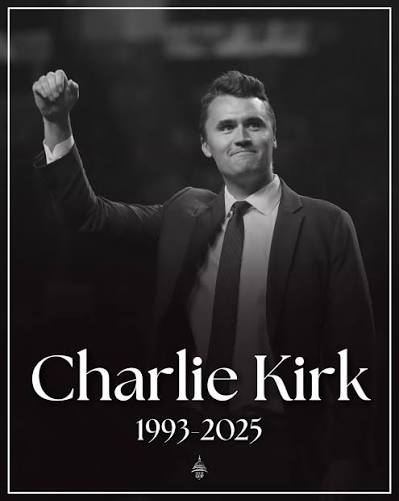

Source: The Deseret News / AP Photo, via Spectrum News; Tess Crowley photographer.
Since the day Charlie Kirk was murdered, the internet has been flooded with every insult, smear, and cherry-picked line his enemies could dig up. Racist. Sexist. Fascist. Hateful. The attacks are meant to bury his ideas under character assassination, turning him into a cartoon villain so that people can justify the violence committed against him. But the truth is simple: when you look at his words in context, you find policy arguments and cultural critiques, not the wild-eyed hatred his critics want you to believe. This article will set the record straight and expose the dishonest agenda behind these smears.
The Civil Rights Act Smear
Critics circulate the soundbite where Kirk said, “We made a huge mistake when we passed the Civil Rights Act in the 1960s,” and stop right there, as if that proves he was against equality under the law. In reality, he explained that the Act unleashed a wave of welfare dependency that gutted Black families, made fathers unnecessary in the home, and incentivized broken households. He argued that before the 1960s, Black communities were slowly building wealth, starting businesses, and strengthening family ties — and that government interference derailed that progress. Agree or disagree, that is a policy critique about unintended consequences, not a wish to see minorities stripped of rights.
The Affirmative Action and Black Women Smear
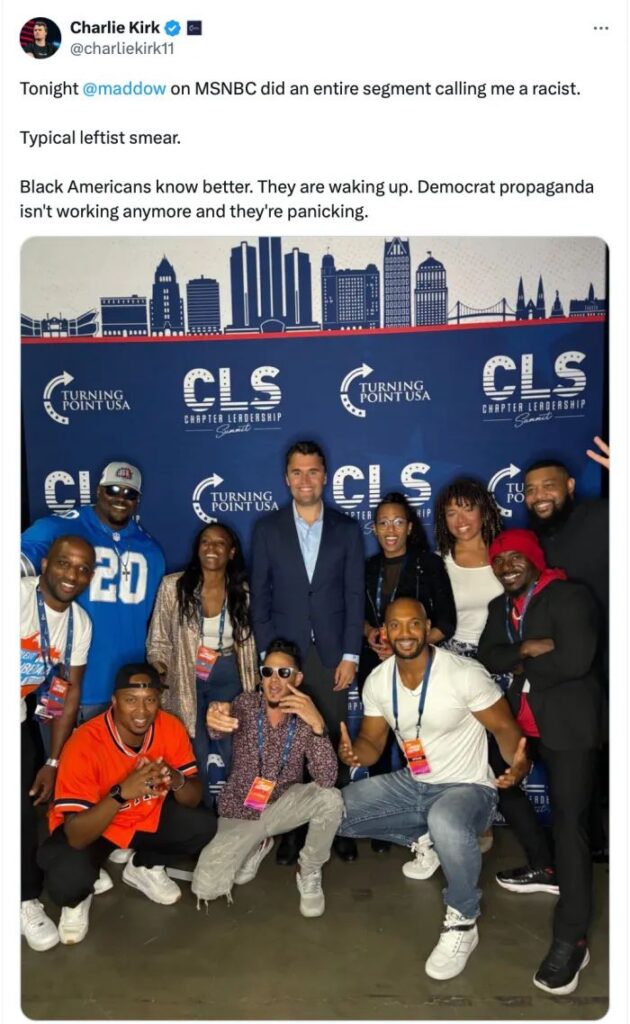
Opponents quote: “Charlie Kirk said Black women don’t have the brain power to be taken seriously and had to steal a white person’s slot.” Out of context, that looks like open racism and misogyny. But in full, Kirk was hammering affirmative action — saying the very logic of quotas implies that Black women can’t succeed without special treatment. He was calling the policy insulting, especially toward women who earned success on their own, and pointing out that some prominent figures admitted they only advanced because of affirmative action. Critics twisted a policy debate into a cheap smear that he thought all Black women were stupid.
The Black Pilot Smear
His critics claimed he didn’t trust Black pilots, quoting him: “If I see a Black pilot, I’m going to be like, boy, I hope he’s qualified.” Taken in isolation, it sounds like racial stereotyping. But the surrounding argument was about airlines and regulators bragging about hiring for “diversity first.” Kirk’s point was that DEI undermines trust in people who actually are qualified, because the public is left wondering if skin color got them the job instead of merit. Again, his words were a critique of the system, not an attack on Black professionals.
The Jewish Money Smear
Opponents say Kirk believed “Jewish money is ruining America.” What he actually did was criticize powerful donors like George Soros and the massive influence of left-wing billionaires. He also regularly called out non-Jewish elites like Gates, Bezos, and Zuckerberg. Meanwhile, he worked with Jewish conservatives, supported Israel, and condemned antisemitism openly. Turning criticism of a billionaire activist into a blanket attack on all Jews is dishonest — but it’s also the easiest way for his opponents to slap a scarlet letter on him without engaging his arguments.
The Transgender Smear
The claim that Kirk “hated transgender people” is just as hollow. He opposed the ideology, not the people. He said men cannot become women and children should not be subjected to medical transition — positions shared quietly by millions of Americans. He called medicalizing minors child abuse and defended fairness in women’s sports. You can disagree with his conclusions, but disagreement with gender ideology is not hatred for transgender individuals. That smear is lazy, dishonest, and meant to shut down debate.
The Sexism Smear
Then there’s the charge of sexism — the idea that he wanted to take away women’s rights. What he actually opposed was abortion and the radical feminist idea that women only matter when they behave like men. He elevated countless women into leadership through Turning Point USA, giving them a national platform. He argued that motherhood and family life should be valued, not treated as second-class compared to careers. Painting him as a caveman who wanted women barefoot and voiceless is just another way of dodging his actual pro-life and pro-family positions.
The Empathy Smear
One of the nastiest distortions was the empathy quote. His words: “I can’t stand the word empathy, actually. I think empathy is a made up new age term that does a lot of damage.” Critics spread this as if he hated kindness itself. But his argument was that “empathy” is now used to excuse destructive policies, like prioritizing criminals over victims or feelings over truth. He contrasted empathy with compassion — saying compassion fixes problems, while empathy gets weaponized to excuse them. His point was philosophical, not heartless.
The Second Amendment Smear
Perhaps the ugliest smear has been the claim that Kirk was comfortable with people dying for the Second Amendment. The soundbite was: “It’s okay for people to get killed to protect the Second Amendment.” What he actually said was: “I think it’s worth… some gun deaths every single year so that we can have the Second Amendment to protect our other God-given rights.” It was a cold, blunt statement about liberty and risk. His comparison was that America accepts 55,000 automobile deaths every year in exchange for the freedom of driving — yet nobody calls for banning cars. The argument was utilitarian, not celebratory, and twisting it into “he wanted gun deaths” is a dishonest smear.
The MLK Jr. Smear
Finally, there’s the Martin Luther King Jr. controversy. Kirk said, “MLK was awful. He’s not a good person. He said one good thing he actually didn’t believe.” His intention wasn’t to erase King’s role in civil rights, but to separate King the icon from King the man. The man had serious flaws — documented infidelity, even in FBI surveillance, and plagiarism in his doctoral dissertation. The icon is a carefully polished, saint-like figure who can’t be questioned. Kirk’s point was that turning real people into untouchable myths prevents honest debate. Critics reduced that into “Kirk hated MLK” because they can’t allow any complexity in the narrative.

The Good They Ignore
What the smear merchants never mention are the parts of Charlie Kirk’s record that flatly contradict their caricature. He constantly told his audience that discussion and debate are always better than violence. He believed in confronting bad ideas with stronger ideas, not with fists or bullets. For a man they brand as hateful, he spent more time on college campuses defending open dialogue than most of his critics ever have.
When asked tough questions, he often gave answers rooted in human dignity. A transgender person once asked him about transitioning, and he didn’t lash out or mock them. Instead, he urged them to pause before using chemicals to permanently alter their body. He told them to seek healing and to learn to love themselves as they are first. That is not hatred; that is someone offering a hard truth with the hope of sparing regret.
He also refused to buy into the narrative that Black Americans are doomed to victimhood. He told audiences that Black people are not second-class citizens, that they are capable of everything he was capable of, and that their future didn’t have to be chained to dependency or despair. He called for healing in the Black community — for family, prosperity, and faith to be restored so that strength and dignity could rise again. That message is the opposite of racism; it’s empowerment.
This is the Charlie Kirk his critics will never acknowledge. The man who believed in discussion over violence. The man who told people to value themselves instead of mutilating themselves. The man who told minorities they were strong, capable, and equal — not broken victims. They ignore that side of him because it undercuts their caricature. To admit it would mean facing that the man they smeared might have been driven by conviction, not hate.
Conclusion
The pattern is obvious. From twisting his critiques of the Civil Rights Act, to cutting up his debates about affirmative action, to smearing his comments on DEI and pilots, to flattening his rejection of gender ideology into “hatred” — every line gets reduced to a caricature. Add in the “Kirk called MLK awful” distortion, and you see the same formula: strip away context, slap on the label of racist, sexist, fascist, hateful, and repeat it until it sticks.
Why? Because if you can convince the public that Charlie Kirk was nothing more than a monster, then his assassination becomes easier to rationalize. If you paint him as “evil,” then people don’t have to wrestle with the uncomfortable reality that their own side’s rhetoric — their own gleeful mockery, their own normalization of hate — created the climate where political murder became thinkable. The smears are not about truth. They are about absolution. Demonizing Kirk after death isn’t debate; it’s a shield for those who don’t want to face their own culpability.