

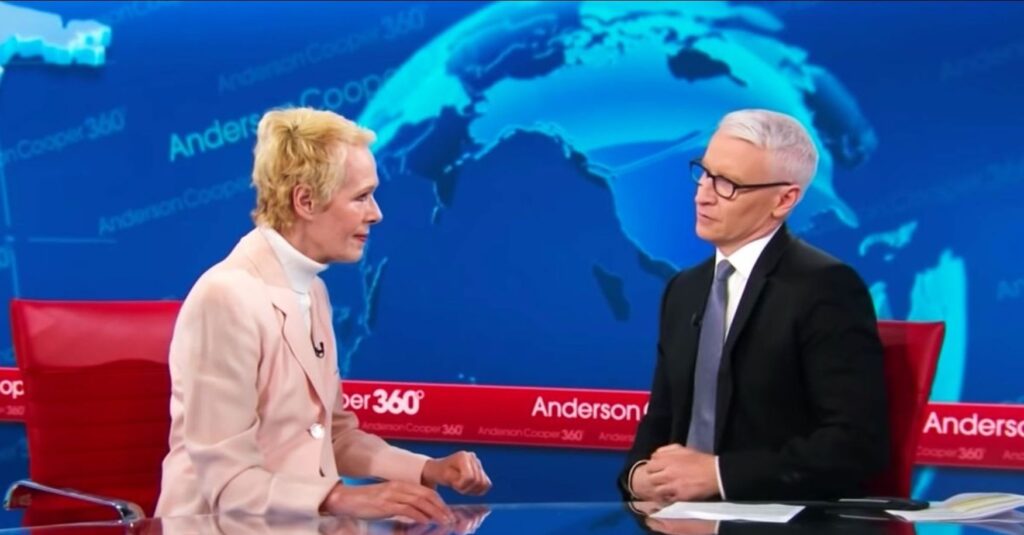
Source: CNN / Anderson Cooper 360°, June 24, 2019. Video excerpt available via CNN
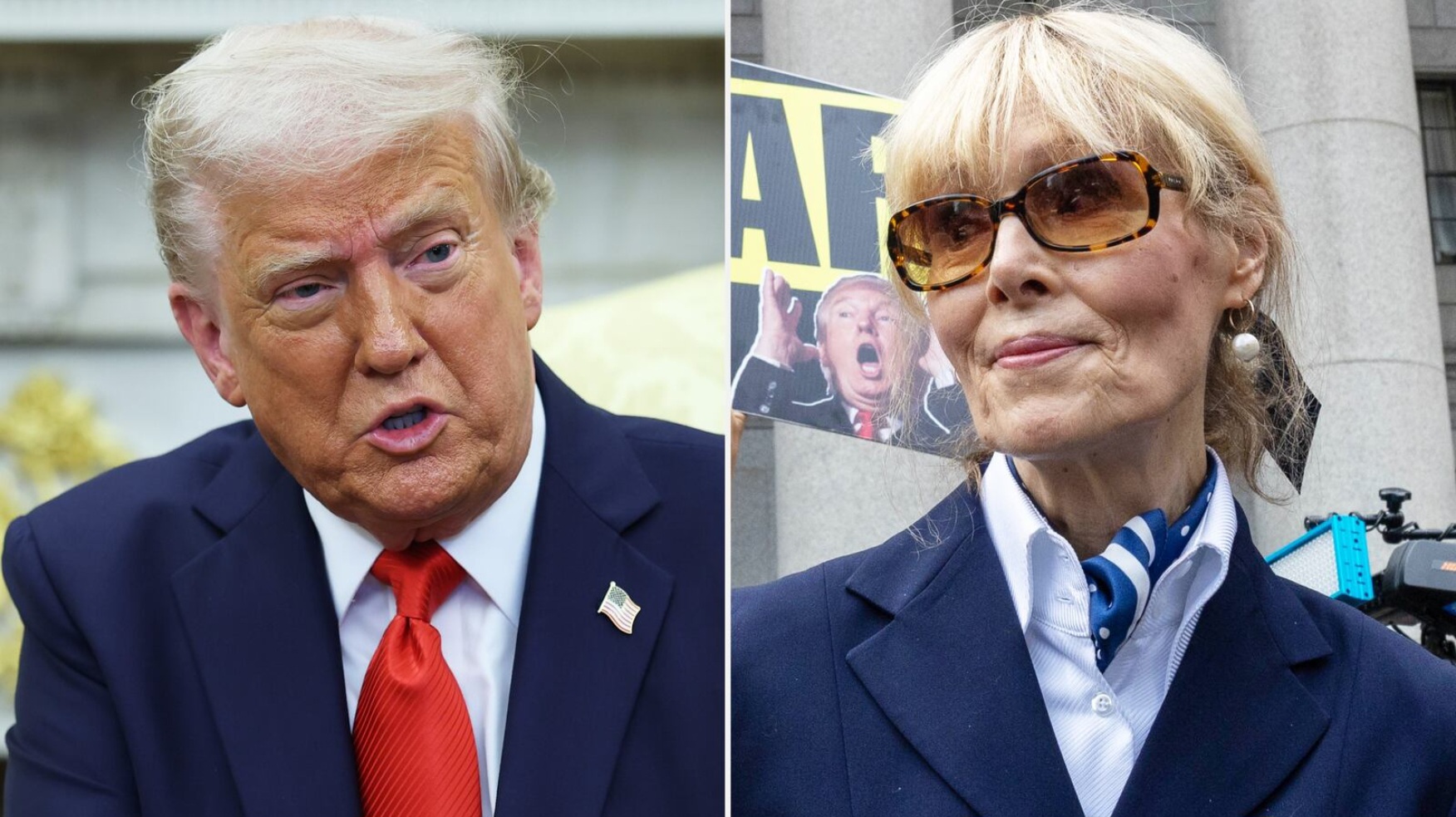
In 2019, E. Jean Carroll, a longtime advice columnist and media personality, accused Donald Trump of sexually assaulting her in a dressing room at the Bergdorf Goodman department store in Manhattan. According to her claim, the incident took place sometime in the mid-1990s. Carroll alleged that she encountered Trump while shopping, engaged in flirtatious banter with him, and ended up inside a dressing room where he allegedly pushed her against the wall, forcibly kissed her, and then raped her. These claims were outlined in her memoir and later restated in interviews and court filings. Carroll could not provide a specific date or even an approximate season or year, citing trauma-induced memory gaps. Her legal team insisted that the absence of a timeline should not undermine her credibility, and the case moved forward despite lacking the basic temporal framework that any defense team would need to build a counter-narrative.
The accusation against Donald Trump wasn’t just decades old. It was vague, unverified, and lacked even the most basic markers that any credible claim of sexual assault should have. The absence of a date meant there was no way for Trump’s legal team to gather concrete evidence: no security footage to subpoena, no store employee records to cross-reference, and no calendar or alibi to verify. That alone should have made the case legally impossible to defend against. When someone is accused of a life-destroying act, the very least the accuser should be able to provide is when it supposedly happened. Because that’s how a defense works: with evidence, witnesses, and records tied to a specific point in time. Strip that away, and you don’t have a legal case. You have a hit job.

Source: U.S. General Services Administration / U.S. Court of Appeals for the Second Circuit
E. Jean Carroll’s claim of sexual assault against Donald Trump raises serious doubts when examined through the lens of psychological and behavioral credibility. She alleges a detailed encounter in a department store dressing room—describing the who, what, where, and how with striking clarity—yet claims she cannot recall the day, month, or even the year it occurred. While trauma can disrupt memory, it rarely does so in such a selective fashion. Adults who experience genuine trauma typically retain at least a general timeframe. The notion that every element of the event remains vivid except the date strains credibility and appears more legally convenient than psychologically consistent.
What further undermines her claim is her behavior after the alleged assault. Carroll continued shopping at the very store where she says the rape took place—for over two decades—without any documented emotional distress or avoidance. This contradicts well-established trauma responses, as survivors usually avoid the scene of their assault unless compelled by necessity. Her lack of a police report, absence of contemporaneous witnesses, and decision to first reveal the allegation in a book she publicly promoted all point toward a constructed narrative rather than a spontaneous act of disclosure. Taken together, these factors suggest her claim is not rooted in genuine trauma but more likely motivated by politics, publicity, or personal grievance.
Despite this, the media swallowed it whole and regurgitated it louder. Legacy outlets called it brave, groundbreaking, and credible, with barely a hint of scrutiny. Carroll was paraded around late-night shows and primetime news as though she’d survived a war zone. Her story morphed with every retelling. She joked about rape, calling it “sexy,” and laughed while discussing her allegations. The public saw her behavior, but the press told us not to believe our own eyes. Even when she appeared unhinged, making statements that no trauma survivor would logically say on national television, the media painted her as a truth-teller. Facts be damned.
Then came the “Law and Order: SVU” episode. A fictionalized case, clearly inspired by Carroll’s accusations, aired with eerie timing. Hollywood joined the pile-on, softening public skepticism by doing what it does best: fictionalizing propaganda and presenting it as moral truth. By the time the case reached the courtroom, the jury pool had been marinating in months of suggestive framing. Not just from the media, but from entertainment, political pundits, and social pressure. This wasn’t just a court of law; it was a theater of conviction.
The trial itself was a legal farce. No witnesses. No surveillance footage from the department store. No medical or forensic evidence. Nothing to corroborate her story except Carroll’s word and the hearsay of two friends who claimed she told them years after the fact. That’s not evidence; it’s narrative reinforcement. Meanwhile, Trump was handcuffed procedurally. How do you defend yourself against an accusation that lacks a date? How do you provide alibis or documentation when you don’t even know when you’re accused of doing something?
The judge allowed this case to proceed despite every red flag. He permitted a trial with no real basis in physical evidence and allowed character attacks to serve as the foundation of the case. He consistently sided with Carroll’s team on key procedural rulings. Trump’s ability to rebut claims was limited, and the trial became more about emotion and political optics than it ever was about truth. Judges are supposed to referee, not steer the game. But in this case, the referee was playing quarterback.
The legal underpinnings were equally suspect. The lawsuit was only possible because of New York’s Adult Survivors Act (ASA), a temporary law passed in 2022 that opened a one-year window for adults to sue over alleged sexual misconduct that had exceeded the statute of limitations. Lawmakers made no secret of the fact that the bill was passed largely in response to Carroll’s case. While others used the ASA as well, the political motivation was obvious. The Constitution prohibits ex post facto laws in criminal cases, but this was a civil workaround that achieved the same effect: reviving long-dead accusations and undermining the legal principle of finality. The ASA’s retroactivity is legally controversial, and its use here raises serious due process concerns.
When the verdict came down—a multi-million-dollar judgment against Trump—the appeals process began. Trump’s team raised serious constitutional questions: the retroactive nature of the ASA, the impossibility of mounting a defense without a date, the prejudicial media environment, and the conduct of the judge. The Second Circuit rejected the appeal. Then, when asked to hear the case en banc, the court declined. They didn’t even want to discuss it. When courts refuse to entertain substantial constitutional concerns because of who the defendant is, that’s not justice. That’s political triage.
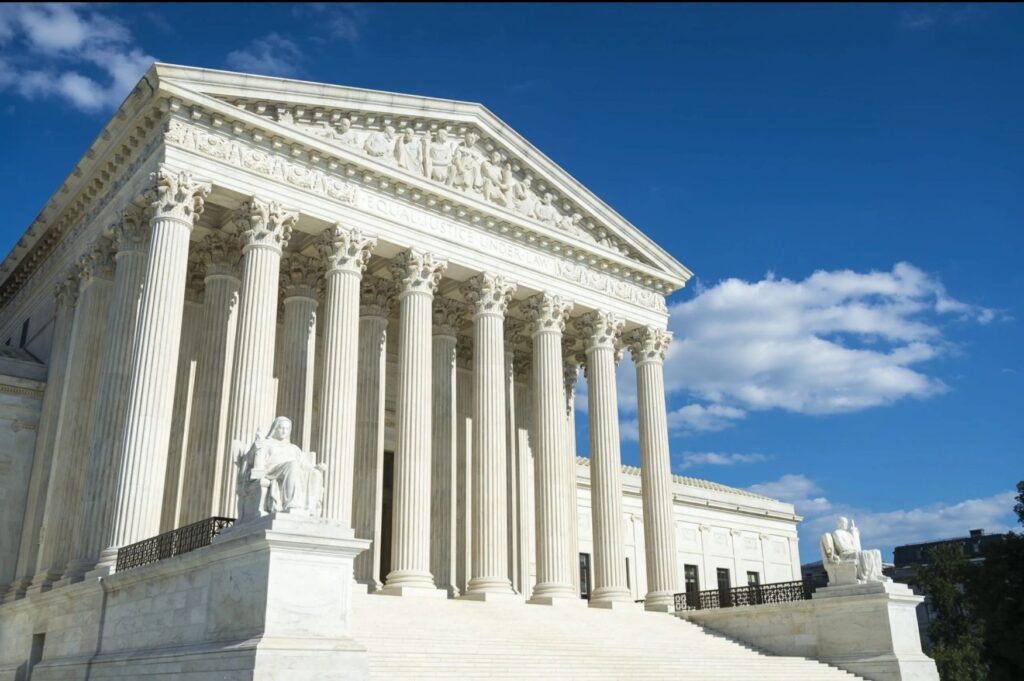
Source: Photograph of the U.S. Supreme Court Building, Washington, D.C., by Jerry Fornarotto. Published online on Pixels.com
Trump still has one move left: the Supreme Court. He can petition them to hear the case, though there’s no guarantee they will. But make no mistake—this isn’t about one defamation trial. It’s about precedent. If we now live in a country where someone can be accused of a decades-old crime, without evidence, without a date, and still be convicted in the public square and courtroom alike, then the rule of law is no longer the rule at all. It’s just lawfare, and Trump is the test case. If they can do it to him, they can do it to anyone.